
You can now find me over at my new blog WOCreads, where I will I continue to promote the works of women writers of color. Hope you’ll move on with me!
You can now find me over at my new blog WOCreads, where I will I continue to promote the works of women writers of color. Hope you’ll move on with me!
It’s November 9th.
Perhaps you don’t know, but on November 9th 1938, Nazis launched the Kristallnacht. Never forget! Today Neonazis are marching and celebrating.
And today, Americans voted a fascist into office. Today, Donald Trump is president-elect of the United States.
I’m so worried for you, my friends! This is horrifying and I know you will be hit the hardest. I wish I could at least be there for real hugs!
I have thought about not posting today, you need time to mourn to steal yourself for this even more explicit racist society you’re living in. I have decided to go ahead, because I still believe that diverse literature can effect real change. And so I want this blog on November 9th, 2016, to push PoC lit by focusing on indigenous #ownvoices literature.
Wonderful Brendon at Reading and Gaming for Justice is hosting the “Native Hawaiian #OwnVoices” blog event, to promote Native Hawaiian voices, to educate ourselves on our own blind spots (settler colonialism for example). Read all about it here. I have decided on non-fiction, to get you all to put some of these on your #nonfictionnovember lists and because I think, like myself, you perhaps also need some background literature. I know many of the are academic texts and there are concerns of accessibility. But I hope many of you can and will give these a try. I hope I’ll find some more accessible texts in the future, but I also love to discuss because often understanding texts happens in group discussions.

 Aloha Betrayed: Native Hawaiian Resistance o American Colonialism by Noenoe K. Silva
In 1897, as a white oligarchy made plans to allow the United States to annex Hawai’i, native Hawaiians organized a massive petition drive to protest. Ninety-five percent of the native population signed the petition, causing the annexation treaty to fail in the U.S. Senate. This event was unknown to many contemporary Hawaiians until Noenoe K. Silva rediscovered the petition in the process of researching this book. With few exceptions, histories of Hawai’i have been based exclusively on English-language sources. They have not taken into account the thousands of pages of newspapers, books, and letters written in the mother tongue of native Hawaiians. By rigorously analyzing many of these documents, Silva fills a crucial gap in the historical record. In so doing, she refutes the long-held idea that native Hawaiians passively accepted the erosion of their culture and loss of their nation, showing that they actively resisted political, economic, linguistic, and cultural domination. (Duke UP)
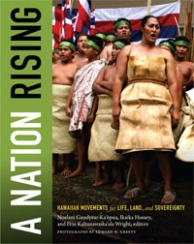
 A Nation Rising: Hawaiian Movements for Life, Land, and Sovereignity by Noelani Goodyear-Ka’opua, Ikaika Hussey, Erin Kuhanawaika’ala Wright, eds.
A Nation Rising chronicles the political struggles and grassroots initiatives collectively known as the Hawaiian sovereignty movement. Scholars, community organizers, journalists, and filmmakers contribute essays that explore Native Hawaiian resistance and resurgence from the 1970s to the early 2010s. Photographs and vignettes about particular activists further bring Hawaiian social movements to life. The stories and analyses of efforts to protect land and natural resources, resist community dispossession, and advance claims for sovereignty and self-determination reveal the diverse objectives and strategies, as well as the inevitable tensions, of the broad-tent sovereignty movement. The collection explores the Hawaiian political ethic of ea, which both includes and exceeds dominant notions of state-based sovereignty. A Nation Rising raises issues that resonate far beyond the Hawaiian archipelago, issues such as Indigenous cultural revitalization, environmental justice, and demilitarization. (Duke uP)

 The Seeds We Planted: Portraits of a Native Hawaiian Charter School by Noelani Goodyear-Ka’opua
The Seeds We Planted tells the story of Hālau Kū Māna, one of the only Hawaiian culture-based charter schools in urban Honolulu. Against the backdrop of the Hawaiian struggle for self-determination and the U.S. charter school movement, Noelani Goodyear-Ka‘ōpua reveals a critical tension: the successes of a school celebrating indigenous culture are measured by the standards of settler colonialism. (UP Minnesota)
 Voices of Fire: Reweaving the Literary Lei of Pele and Hi’iaka
by Ku‘ualoha ho‘omanawanui
Stories of the volcano goddess Pele and her youngest sister Hi‘iaka, patron of hula, are most familiar as a form of literary colonialism—first translated by missionary descendants and others, then co-opted by Hollywood and the tourist industry. But far from quaint tales for amusement, the Pele and Hi‘iaka literature published between the 1860s and 1930 carried coded political meaning for the Hawaiian people at a time of great upheaval. Voices of Fire recovers the lost and often-suppressed significance of this literature, restoring it to its primary place in Hawaiian culture. (Minnesota UP)
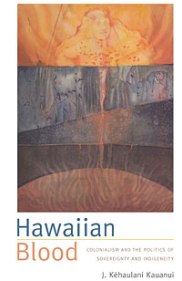
Hawaiian Blood: Colonialism and the Politics of Sovereignty and Indigeneity
by J. Kēhaulani Kauanui
In the Hawaiian Homes Commission Act (HHCA) of 1921, the U.S. Congress defined “native Hawaiians” as those people “with at least one-half blood quantum of individuals inhabiting the Hawaiian Islands prior to 1778.” This “blood logic” has since become an entrenched part of the legal system in Hawai‘i. Hawaiian Blood is the first comprehensive history and analysis of this federal law that equates Hawaiian cultural identity with a quantifiable amount of blood. J. Kēhaulani Kauanui explains how blood quantum classification emerged as a way to undermine Native Hawaiian (Kanaka Maoli) sovereignty. Within the framework of the 50-percent rule, intermarriage “dilutes” the number of state-recognized Native Hawaiians. Thus, rather than support Native claims to the Hawaiian islands, blood quantum reduces Hawaiians to a racial minority, reinforcing a system of white racial privilege bound to property ownership. (Duke UP)
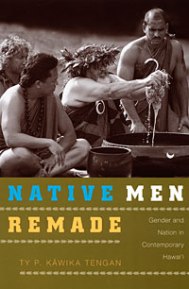
Native Men Remade: Gender and Nation in Contemporary Hawai’i by Ty P. Kawika Tengan
Many indigenous Hawaiian men have felt profoundly disempowered by the legacies of colonization and by the tourist industry, which, in addition to occupying a great deal of land, promotes a feminized image of Native Hawaiians (evident in the ubiquitous figure of the dancing hula girl). In the 1990s a group of Native men on the island of Maui responded by refashioning and reasserting their masculine identities in a group called the Hale Mua (the “Men’s House”). As a member and an ethnographer, Ty P. Kāwika Tengan analyzes how the group’s mostly middle-aged, middle-class, and mixed-race members assert a warrior masculinity through practices including martial arts, woodcarving, and cultural ceremonies. Some of their practices are heavily influenced by or borrowed from other indigenous Polynesian traditions, including those of the Māori. The men of the Hale Mua enact their refashioned identities as they participate in temple rites, protest marches, public lectures, and cultural fairs. (Minnesota UP)
Apparently critiques by Hawaiian women will be discussed as well, I certainly hope so!
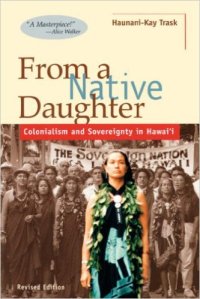
 From a Native Daughter: Colonialism and Sovereignty in Hawai’i
by Haunani-Kay Trask
Since its publication in 1993 From a Native Daughter, a provocative, well reasoned attack against the rampant abuse of Native Hawaiian rights, institutional racism, and gender discrimination, has generated heated debates in Hawai’i and throughout the world. This revised work includes new material that builds on issues and concerns raised in the first edition: Native Hawaiian student organizing at the University of Hawai’i; the master plan of the Native Hawaiian self-governing organization Ka Lahui Hawai’i and its platform on the four political arenas of sovereignty; the 1989 Hawai’i declaration of the Hawai’i ecumenical coalition on tourism; a typology on racism and imperialism. Brief introductions to each of the previously published essays brings them up to date and situates them in the current Native Hawaiian rights discussion.(UH Press)
This one comes highly recommended by Alice Walker and is somewhat of a classic in the field.
Finding Meaning: Kaona and Contemporary Hawaiian Literature
by Brandy Nalani McDougall
In this first extensive study of contemporary Hawaiian literature, Brandy Nalani McDougall examines a vibrant selection of fiction, poetry, and drama by emerging and established Hawaiian authors, including Haunani-Kay Trask, John Dominis Holt, Imaikalani Kalahele, and Victoria Nalani Kneubuhl. At the center of the analysis is a hallmark of Hawaiian aesthetics—kaona, the intellectual practice of hiding and finding meaning that encompasses the allegorical, the symbolic, the allusive, and the figurative.
Throughout, McDougall asserts that “kaona connectivity” not only carries bright possibilities for connecting the present to the past, but it may also ignite a decolonial future. Ultimately, Finding Meaning affirms the tremendous power of Indigenous stories and genealogies to give activism and decolonization movements lasting meaning. (U of Arizona Press)
A Chosen People, a Promised Land: Mormonism and Race in Hawai’i
by Hokulani K. Aikau
A Chosen People, a Promised Land explores how Native Hawaiian members of the Church of Jesus Christ of Latter-Day Saints negotiate their place in this quintessentially American religion. Using the words of Native Hawaiian Latter-Day Saints to illuminate the intersections of race, colonization, and religion, this book examines Polynesian Mormon faith and identity within a larger political context of self-determination. (U Minnesota Press)
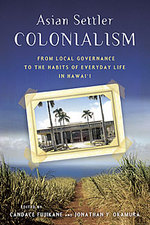
Asian Settler Colonialism: From Local Governance to the Habits of Everyday Life in Hawai’i
by Candace Fujikane and Jonathan Y. Okamura, eds.
Asian Settler Colonialism is a groundbreaking collection that examines the roles of Asians as settlers in Hawai‘i. Contributors from various fields and disciplines investigate aspects of Asian settler colonialism to illustrate its diverse operations and impact on Native Hawaiians. Essays range from analyses of Japanese, Korean, and Filipino settlement to accounts of Asian settler practices in the legislature, the prison industrial complex, and the U.S. military to critiques of Asian settlers’ claims to Hawai‘i in literature and the visual arts. (UH Press)
And finally, this work is not edited by Native Hawaiian people, but the book has two sections: Natives and settlers, so you’ll find their perspectives inside. I also think it is important for settlers to work through their position and so I have chosen to add this book to the list. Read the introductory chapter here!
I know it’s a horrible time, please take care and practice self-case! I’m here for hugs and talking!
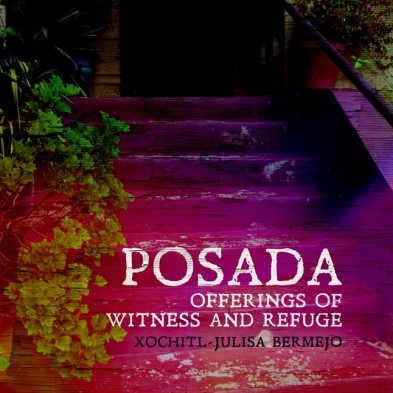
In the four sections of her first poetry collection, Posada- Offerings of Witness and Refuge, Xochitl-Julisa Bermejo takes us with her through the multiple, imaginative and too real border spaces of migration, language and belonging. In the first part, she goes on a journey of remembering, collecting and reconstructing her family’s history. Starting with the stolen metate they brought from Teocaltiche, Bermejo connects the memories and stories of her family, from Uncle Manny’s recollections of his tía Susana and her remedies to Bermejo’s mother who was “never gifted the story of her birth,” presenting in her work the “Pieces I’ve Gathered so Far.”
Part 2 demonstrates the way in which Bermejo draws inspiration from Georgia O’Keeffe, Frida Kahlo and others and appropriately explores gender roles and the relationships of the women in her family, from mothers and daughters in “Frida’s Monkey Nurse:”
I tie her to this world never knowing

where the other will spit her out, never knowing

 when it will finally swallow her whole
to her relationship with her grandmother, to whom this collection is dedicated, in “This Poem is for Nopales:”
Grandma, in the hospital room, when I kissed the fade of your cheek

to say goodbye, crisscrossing chin hairs caught my attention.

Now, when I look in the mirror and And hairs have bloomed overnight,

I think of roots. I think of you. I hope I can be a nopal woman too.
In part 3, “Things to Know for Compañer@s. A No More Deaths Volunteer Guide,” Bermejo draws on her work with the humanitarian organization No More Deaths, which gives medical aid and support along the border. Her poems bear witness to life and death on the migrant trail peppered with resilient cacti.
 Did you know?
 When barrel cacti become tombstones and their
 yellow starburst blooms offerings for the dead, you won’t be too cool to
 belt Katy Perry songs.
Did you know?
Migrants are hurried over trails at night and without light.
Their blisters are caused by continuous friction, muscle cramping by
dehydration, vomiting by drinking bacteria ridden cow pond water,
and those who move too slow are left behind.
In the last part, Bermejo pays witness to other/s’ stories of refuge and migration, connecting and piecing together similar and interrelated struggles from Arizona to Chavez Ravine to Gaza. She bears witness to tales of desperation, of refuge and migration and gives names and faces to those who too often remain just numbers to us. Posada is a fantastic, visceral debut collection of social justice poetry, not only exploring the different meanings of borders, but also providing safe spaces and comfort for those straddling them.
Xochitl-Julisa Bermejo is a first generation Chicana. She is a 2016-2017 Steinbeck fellow and has received residencies with Hedgebrook, the Ragdale Foundation, and is a proud member of the Macondo Writers’ Workshop. In Los Angeles, she is a cofounder of Women Who Submit, a literary organization using social media and community events to empower women authors to submit work for publication, and curates the quarterly reading series HITCHED.
Posada: Offerings of Witness and Refuge is out today! Go get it here.

Disclaimer: I was given an e-copy of this book by the publisher, Sundress Publications, but never fear I remain my opinionated self!
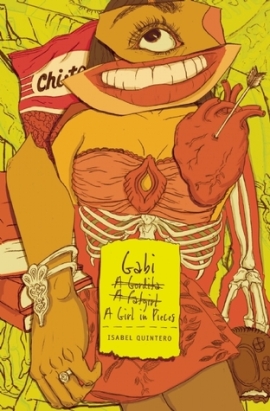
Gabi has a lot on her plate. It’s her last year of high school but apart from classes and college applications, she also has to deal with a father who is fighting a losing battle with meth addiction, her friend Cindy getting pregnant (as a result of date rape, we learn later), her other best friend Sebastian coming out, as well as exploring her own sexuality and first relationships.
Isabel Quintero’s first novel Gabi, A Girl in Pieces, published by CincoPuntoPress, is a tour-de-force. The good thing about being blissfully ignorant about new releases and a lot of hype before joining twitter is that I mostly missed all the excitement and picked up this book only now because I vaguely remembered someone saying it was good and it being LatinX Heritage Month. So I got to skirt the overblown expectations trap, yay, but am totally doing this to you now with this review. #sorrynotsorry
If you’re into intersectional feminism (you better be!), then this book will make you want to get out your highlighters. Let me quote this section, which everyone else is apparently also quoting (google told me, but still thanks for the easy c&p)):
My mother named me Gabriella, after my grandmother who, coincidentally, didn’t want to meet me when I was born because my mother was unmarried, and therefore living in sin. My mom has told me the story many, many, MANY, times of how, when she confessed to my grandmother that she was pregnant with me, her mother beat her. BEAT HER! She was twenty-five. That story is the basis of my sexual education and has reiterated why it’s important to wait until you’re married to give it up. So now, every time I go out with a guy, my mom says, “Ojos abiertos, piernas cerradas.” Eyes open, legs closed. That’s as far as the birds and the bees talk has gone. And I don’t mind it. I don’t necessarily agree with that whole wait until you’re married crap, though. I mean, this is America and the 21st century; not Mexico one hundred years ago. But, of course, I can’t tell my mom that because she will think I’m bad. Or worse: trying to be White.
This excerpt really concisely introduces all the issues Quintero adresses in the novel and also drives home the point that Gabi lives at a very specific intersection of gender, race and ethnicity. So the novel explores one culture’s version of the double-standard, that of patriarchal machismo Mexican-American dichotomy of the virgen/puta. And Gabi has to realize that many women in her community have internalized this toxicity and police other women’s behavior and expression of sexuality (as they tend to, don’t get me started on this issue), her mother among them:
“for my mother, a woman’s whole value is what’s between her legs. And once a man has access to that, she has no more value.”
Part of this patriarchal view is also the refusal to accept homosexuality and Gabi’s friend Sebastian is thrown out by his parents when he comes out. On the other side of the coin we have the boys will be boys mentality, about which Gabi writes a scathing poem.
Gabi is furthermore not marked Mexican-American by her skin color, instead she is so light-skinned she can pass as white but as a result has to deal with feeling alienated at times. Since I basically have the opposite problem, this was an interesting change in perspective.
The book also shows Gabi’s acceptance when it comes to her body and she moves from regarding herself as a “fatgirl” to acceptance. There’s a terrible lack of “fativism” in books and hopefully this will change in coming years, but it’s another reason why I hope Gabi will be read and taught widely, so these young women will see themselves represented too.
I also loved was watching Gabi coming into her own as a poet, apart from the diary style of the novel, we also get to read Gabi’s poetry and her attempts at spoken word. Poetry is how Gabi finds a way to express and empower herself. Her words are sharp and to the point and you’ll want to pick up a poetry collection immediately after finishing this book (I’ll be gushing about one particular, exciting collection later this week, stay tuned!).
The language use is wonderfully done as well, I’m glad there’s no glossary and hardly any translations. Quintero makes me work for it and I gladly got out my rusty Spanish for beginners knowledge, and between knowing other romance language and guessing from context…no excuses people! I’m sure LatinX will love this book and the intermingling of English and Spanish…Spanglish? And us other readers do well to remember to work on our privilege.
It’s amazing that this is a first novel. It’s a book that will be taught in high schools and colleges everywhere!
Other thoughts:
Have you reviewed this book? Let me know and I’ll add a link!
It’s here: Diverse Detective Fiction Month! I’m super excited and thanks all who are joining us! (everyone else can still join us, sign up here)
So, this event (go ahead and call it a challenge if you’re feeling competitive) will be hosted by  @siliconphospho and myself, @Bina_ReadThis because detective fiction is our comfort genre, but at first glance utterly normative, and when Silicon asked for recs and came up with an amazing list, things snowballed. So here we are, who’s in the mood for exploring the diverse side of detective fiction?
Here’s the guidelines:
Have fun! Also, read at least 1 diverse detective story (we encourage you to go for #ownvoices books!) and post a review on your blog or goodreads between October 1st and October 31st. Also, feel free to follow us on twitter and gush a lot about the books or audiobooks or short stories you’re reading! Use the hashtag #DiverseDetectives 
So I kinda took this opportunity to stock up my mystery shelf with some much-needed diverse books. Okay fine, that’s partly the reason for the challenge! Here’s my tbr for the challenge, as you can see, I’m trying to lead by example 😉
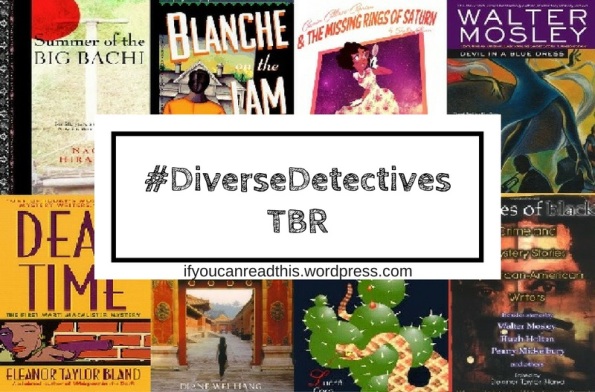
Summer of the Big Bachi by Naomi Hirahara
Blanche On the Lam by Barbara Neely
Cosmic Callisto Caprica & The Missing Rings of Saturn by Sophia Chester
Devil in a Blue Dress by Walter Moseley
Dead Time by Eleanor Taylor Bland
The Eye of Jade by Diane Wei Liang
Cactus Blood by Lucha Corpi
Shades of Black: Crime and Mystery Stories by African-American Authors ed. by Barbara Neely
Make sure to check out our goodreads list for recommendations or vote for books there if you have recommendations for us!
Fall, my favorite season!! So far it’s been unusually warm and sunny over here, I’d love a few degrees less but hey at least it’s dry, that never happens! Fall is when I start buying IKEA candles in bulk and get out all the quilts and spicy teas. My typical fall reading is either cozy or suspenseful lit and with the Diverse Detective Fiction Month starting this weekend, I know I’ll be reading a lot of mysteries. I’ve posted a bit already about what horror lit I want to read and what’s on this week’s list, but anyway here are 10 reads that would make an ideal fall tbr for me:
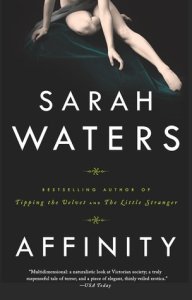
1. Affinity by Sarah Waters
One of my favorites to reread, it’s got Victorian England, lesbians, séance and is wonderfully atmospheric and twisty.
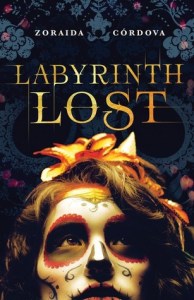
2.Labyrinth Lost by Zoraida Córdova 
Latinx fantasy including brujas, monsters, LGBTQ, and kick ass women of color! Reading it for Diverse SFF Book Club.
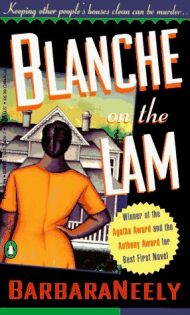
3.Blanche On the Lam by Barbara Neely
One of my choices for #DiverseDetectives and I cannot wait! A smart middle-aged Black woman housekeeper turned sleuth? Hell yes!
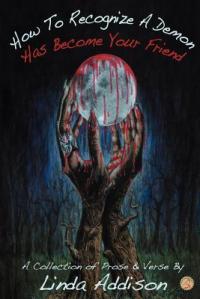
4.How to Recognize A Demon Has Become Your Friend by Linda Addison
Always creepy, sometimes funny, horror prose and poetry! There is not enough silly and funny horror, I need more!
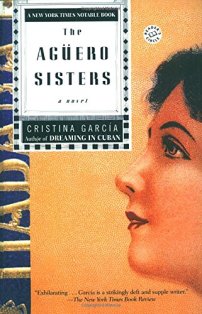
5.The Agüero Sisters by Cristina Garcia
I loved Garcia’s Dreaming in Cuban and this one is supposed to boast some Latina gothic elements. How to resist!?
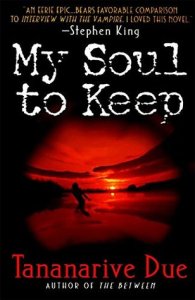
6.My Soul To Keep by Tananarive Due
No fall list is complete without some of Due’s fiction. It’s time to start her African Immortals series, it’s got Ethiopia, vampires and (im)mortality!
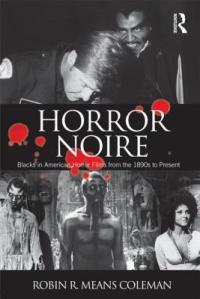
7.Horror Noire: Blacks in American Horror Films From the 1890s to the Present by Robin R. Means Coleman
And some good old non-fiction, how could I possibly resist the intersection of horror and race!? It’s an exploration of the visual representation of Black social history and possible spaces for challenging and subverting stereotypes.
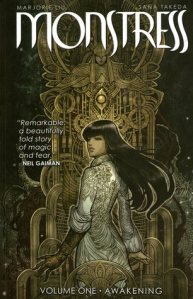
8.Monstress by Marjorie M. Liu
A complex heroine, fantastic art and steampunk horror, I’m in! Everyone’s been gushing about this one, so now I only need to get my hands on a copy.
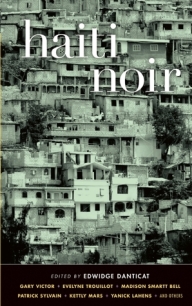
9.Haiti Noir edited by Edwidge Danticat
Noir lit and Haitian culture all in one! I’ve read a few in this anthology and have been meaning to get back to it for a while.
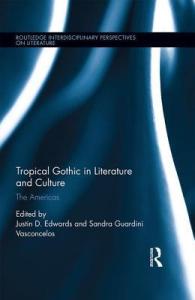
10.Tropical Gothic in Literature and Culture: The Americas by Justin D. Edwards and Sandra Guardini eds.
More non-fiction cause I feel the need to expand on my gothic lit knowledge and Southern gothic is a gateway to “tropical” gothic! 🙂
Now let me know which books have made it onto your fall tbr!
The meme that we use to share what we read this past week and what our plans are for the upcoming week. Now hosted by The Book Date.
Last Week
I’ve managed to finish some books finally, I feel like I’m always working through 6 books at a time, and it takes me ages to get anything read. Time to rethink that strategy, but I’m always saying that. I did finish two good ones though:
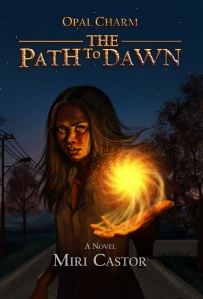
Opal Charm: The Path To Dawn by Miri Castor is the first book in a fantasy series about reluctant heroine Opal Charm, who struggles with life and family as it is, but then her new friend Hope Adaire let’s slip that Opal is the only one to save Hope’s world from destruction. Poor Opal! A very readable fantasy novel and I’ll be reading the sequel when it comes out.
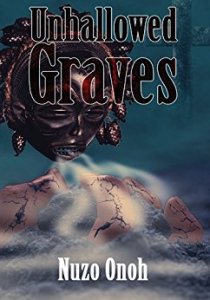
Unhallowed Graves by Nuzo Onoh is a Nigerian horror collection and I did my best to read it in daylight but it’s much more fun to read at night by candle light. Fantastic settings and use of mythology, do read if you’re into the creepy stuff!
Since it’s also finally fall, my favorite season, I went to the pumpkin market. Most of these will make excellent dinners as well as pumpkin bread and cookies!
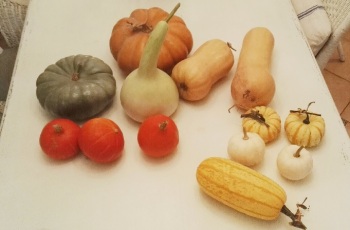
Currently
Reading some more excellent books at the moment. I have too many on the go, but here’s what I’m mostly focusing on:
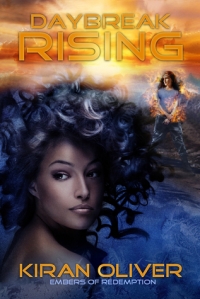
Daybreak Rising by Kiran Oliver. A YA/NA fantasy book about a failed hero with the chance at redemption. So far I’m really into the anti-normativity of the characters and the story’s politics. And finally someone who knows what demiromantic is and yeah that got my attention, so here I am reading a book with lots of romance elements.
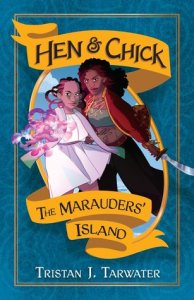
Hen & Chick by Tristan J. Tarwater, another YA fantasy. Kinda proud of myself for exploring more YA! Also, this one has pirates AND magic! How could I resist? Add to that brown girls kicking ass and a focus on mother-daughter relationships. 
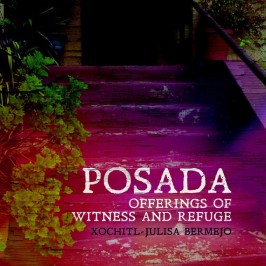
Posada: Offerings of Witness and Refuge by Xochitl-Julisa Bermejo, a wonderful collection of poetry. I’m working my way through it at the moment, since it’s LatinX Heritage Month and check out all the amazing LatinX things going on at Naz’s Read Diverse Books!
Soon
It’ll be October soon and I’m very excited for the Diverse Detective Fiction Month hosted by Silicon and myself. More info here, including sign-ups. The only requirement is to read 1 #DiverseDetectives book and write about it on your blog/goodreads/bookstagram. Won’t you join us?
What have you all been up to? Have a great week!
It’s September and for me finally the beginning of the creepy season, huzzah! I’ll just ignore that last small heat wave this week, go away please summer, I have my tea and candles and creepy reads ready! I have a lot of books on my tbr that fall under speculative, horror and mystery, but I’m also working towards seeking out and supporting more women writers of Color. I’ve chosen horror because it’s a genre I’ve been wanting to explore more and because, like science-fiction and fantasy, horror can offer women of Color a space in which to disturb social conventions and transgress boundaries.
This here is a list of 10 works by WoC writers that can be considered horror (often also fantasy) and some of which may be new to you as well. Let’s start with a better known one:
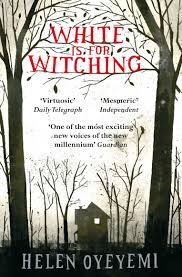
White is for Witching by Helen Oyeyemi
Haunted house story and a reworking of the gothic trope, Oyeyemi’s work is a psychological fest around trauma, racism and a sentient house set in Dover, England. I hope I’ll get to read it finally for RIPXI.
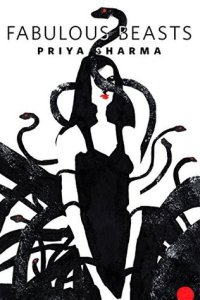
Fabulous Beasts by Priya Sharma
This is a novelette or short story about two sisters or cousins and childhood abuse set in gritty Liverpool. Apparently it’s super disturbing and comes with trigger warnings for abuse, rape and incest, yikes! It’s published by TOR though.
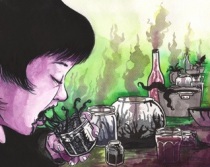
Hungry Daughters of Starving Mothers by Alyssa Wong
Silicon recommended Alyssa Wong’s stories to me and I’ll definitely read at least one this fall since her recs are always on point. This story has also received the Nebula Award for Best Short Fiction. It’s got a vampire and is about dating and relationships!
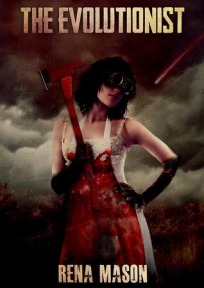
The Evolutionist by Rena Mason
Set in the suburbs of Las Vegas, Stacy keeps dreaming about killing and dismembering people. She feels she’s just a normal person having very vivid nightmares and so Stacy goes to see a psychiatrist, he turns out to be not quite so normal.
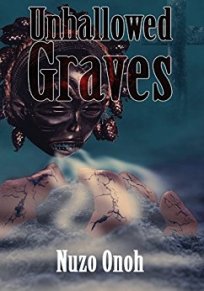
Unhallowed Graves by Nuzo Onoh
“Oja-ale is the night market run by the dead. Everything can be bought for a deadly price. Alan Pearson is a sceptical British diplomat, contemptuous and dismissive of native superstitions…Until the day he receives a terrifying purchase from the Night Market, which defies Western science and logic.” (GR) Onoh is “queen of African horror.”
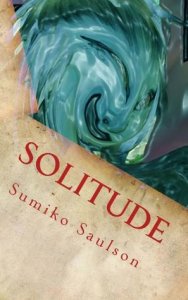
Solitude by Sumiko Saulson
“Solitude is the riveting tale of diverse individuals isolated in a San Francisco seemingly void of all other human life. In the absence of others, each journeys into personal web of beliefs and perceptions as they try to determine what happened to them, and the world around them.” (GR) Saulson also curates a Black women in horror list here.
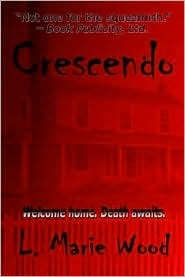
Crescendo by L. Marie Woods
James’ comfortable life changes when he begins having nightmares after his lover’s death. A family curse, can he do anything or is this his destiny? Everyone in his family has secrets. Set in tranquil Rockland County, New York.
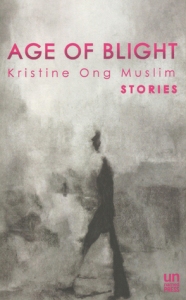
Age of Blight by Kristine Ong Muslim
“What if the end of man is not caused by some cataclysmic event, but by the nature of humans themselves? In Age of Blight, a young scientist’s harsh and unnecessary experiments on monkeys are recorded for posterity; children are replaced by their doppelgangers, which emerge like flowers in their backyards; and two men standing on opposing cliff faces bear witness to each other’s terrifying ends.” (GR) A collection of short stories with illustrations.
How to Recognize a Demon Has Become Your Friend by Linda Addison
“From the first African-American to receive the HWA Bram Stoker award, this collection of both horror and science fiction short stories and poetry reveals demons in the most likely people (like a jealous ghost across the street) or in unlikely places (like the dimension-shifting dreams of an American Indian). Recognition is the first step, what you do with your friends/demons after that is up to you.” (GR)
My Soul to Keep by Tananarive Due
And of course one of my favorite writers! Last year I read Due’s The Good House and it was wonderfully atmospheric and I will make to read this one in broad daylight.
“When Jessica marries David, he is everything she wants in a family man: brilliant, attentive, ever youthful. Yet she still feels something about him is just out of reach. Soon, as people close to Jessica begin to meet violent, mysterious deaths, David makes an unimaginable confession: More than 400 years ago, he and other members of an Ethiopian sect traded their humanity so they would never die, a secret he must protect at any cost. Now, his immortal brethren have decided David must return and leave his family in Miami.” (GR)
*******
And a great opportunity to read horror and more with other book bloggers is Carl’s wonderful yearly challenge, R.I.P. – Readers Imbibing Peril, going on right now! It’s a book blogging institution and now in its 11th year. The challenge takes place from September 1st, 2016 through October 31st, 2016 and offers many different levels and genres, there’s something for everyone in it. Sign up here. I’ll be doing Peril the Second, but I hope I’ll read much more than two creepy reads.
Definitely take a look at Sharlene’s wonderful recs for a more diverse R.I.P here, she has great recommendation for all RIP genres, I know I’ll be reading The Hunter.
Lastly, check out my Queer Horror post for some creepy reading with LGBTQIA+ themes.
What are you all reading this creepy season? Let me know in the comments!
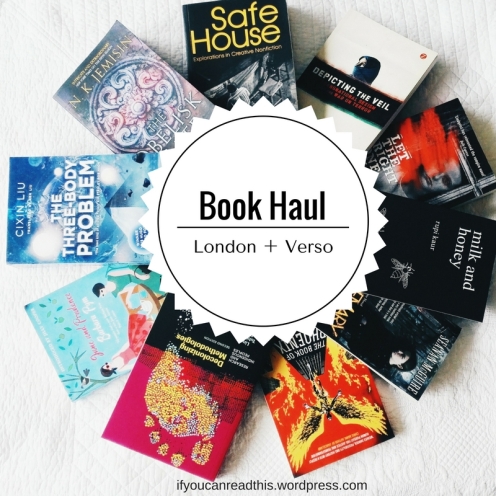
What’s a vacation without splurging on books? Exactly, that’s why I love city trips and especially the wonderful bookstores and charity shops in London. The only downside of my trip was that I could only take 10kg. I’m pretty sure security had a blast at my bookshelf in a bag, but what can you do. Here’s what I got in London (all links to goodreads):
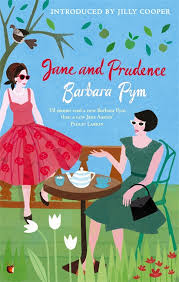
Jane and Prudence by Barbara Pym
This one was dirt cheap in a charity shop, so with my library not carrying any of her books, buying it used was actually the cheapest option. Life is weird!
Have loved so many poems by Rupi Kaur, I wanted to take a look at the whole collection.
Rosemary & Rue by Seanan McGuire
Also dirt cheap and I enjoyed this one. Now that I’v read more by McGuire I want to go back and see if the reading experience is different.
The Obelisk Gate by N.K. Jemisin
I just had to get Jemisin’s new book while I had a book budget or I’d have gone green with envy!
Depicting the Veil by Robin Lee Riley
A bit unsure about this one. It’s written by a white academic feminist, so we’ll see, though I do think it’s an important topic especially for feminists who are white to tackle and work through.
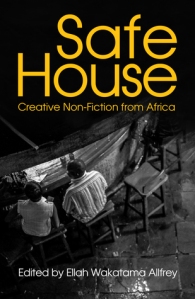
Safe House edited by Ellah Wakatama Allfrey
This one I had to get cause Whitney made it sound amazing. It’s creative non-fiction by writers from Africa, can’t wait to explore!
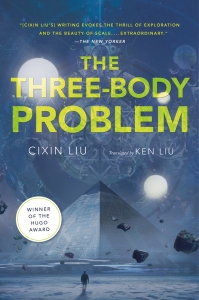
The Three-Body Problem Cixin Liu, transl. by Ken Liu
Read this one already via Scribd, but it was really good and thought I’d get it for the shelves and a reread.
The Book of Phoenix by Nnedi Okorafor
Wanted to get Who Fears Death but they didn’t have it. Shame on you UK bookstores for not carrying more books by Okorafor.
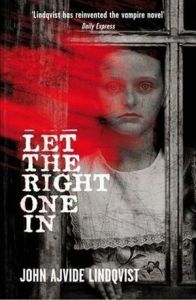
Let the Right One In by John Ajvide Lindqvist
Queer horror for creepy season and also maybe a good read for the R.I.P. challenge.

Decolonizing Methodologies by Linda Tuhiwai Smith
This is a book I’ve been eyeing for quite a while and I just couldn’t resist any longer. It’s also a keeper for the library I’m trying to build.
*****
And then Verso Books had a flash sale of their e-books for 90% off, how to resist!? I got some works I’d wanted to try for a while and some I wasn’t sure enough about to buy a hardcopy of.
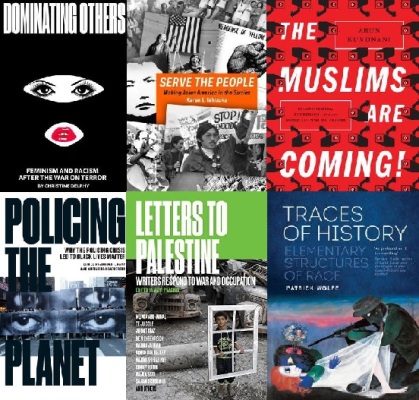
Dominating Others: Feminism and Terror After the War On Terror by Christine Delphy
More adventures in exploring how feminists who are white take on Islamophobia and the war on terror. We’ll see how that goes, can’t say I’m a fan of the cover.
Serve the People: Making Asian America in the Long Sixties by Karen Ishizuka
This one I’m very excited about, it discusses the radical Asian American movement of the 60s.
The Muslims Are Coming!: Islamophobia, Extremism, And the Domestic War On Terror by Arun Kundnani
This one looks at the intersection of Islamophobia, policing and surveillance in the US while the war on terror supposedly only happened somewhere else.
Very timely publication and I wanted to review this but with graduation I didn’t manage to finish before it archived on NetGalley. Well looks like I’ll get to finish the book finally, but less enthusiastic about NetGalley now.
Letters to Palestine: Writers Respond to War and Occupation by Vijay Prashad, ed.
This collection looks really great, it brings together voices Remi Kanazi, Robin D.G. Kelley, Teju Cole and Junot Díaz who discuss a growing awareness in the US of the sufferings of people in Gaza.
Traces of History: Elementary Structures of Race by Patrick Wolfe
This work examines regimes of race brought by colonizers and is written by an Australian academic who does settler colonial studies, so I’m hoping it doesn’t disappoint. Guess there’s a theme here of looking at what potential allies are writing.
Have you read any of these books? Let me know about new books on your shelves or your library stack!!

What Sunny Saw In The Flames, previously published in the US as Akata Witch, is one of the books by one of my favorite writers that I hadn’t read yet. Published by Cassava Republic, the book is out in the UK now! So run to the nearest bookstore!
What Sunny Saw is a wonderful tale of magic and growing into yourself set in Nigeria. Our protagonist Sunny Nwazue is 12 years old with albinism, she is also American-born, like the author, only having moved to Nigeria when she was 9. The US-title Akata Witch, a slur for American-born Africans further drives home this facet of Sunny’s identity. Living in the town of Aba with her parents and younger brothers, Sunny is furthermore Igbo, one ethnicity in Nigeria. I love this representation of complex identities that also mirror my own experience. We are rarely ever just A or B and this novel also shows the Nigerian perspective, people emigrating, people returning, and people visiting. This goes against most Western tales around movement and immigration which usually only present us with that infamous single story.
We first get an inkling of what is to come, when Sunny, as the title promises, sees something in the flame of a candle. Her vision is of a terrible future and shakes her to the core. She begins the get some answers, when she befriends Orlu and Chichi, who introduce her to the world of the Leopard People. Together with Sasha, they form a quartet of magical students, learning about their juju abilities and spirit selves. But Sunny has the most to learn as she is what is called a free agent, a Leopard person whose parents are Lambs (non-magical). However, her vision looms over her newly-discovered identity and soon the group must face the evil Black Hat.
Inevitably comparisons with Harry Potter come up, but as Brendon importantly points out, “We must stop comparing literature and stories in this way because it gives all the credit to the stories of privilege (White, western, straight, male/man, able).” And so, what annoys me with these comparisons is that Harry Potter and other white, Western works are irretrievably set up as originator of certain plots or the origin from which all else strays. However, as we know, Rowling as well as many other Western writers before her have and continue to “borrow” from other works, mythologies and cultures.
World-building is something that I find Okorafor just excels at. I really enjoyed the culture of the Leopard People and also the book inside the book: Fast Facts for Free Agents by Isong Abong Effiong Isong. I’d love to read more from it. Leopard culture is steeped in Igbo and other West African culture and after my last read taught me about Yoruba culture, it was great to revisit and learn more about the Igbo. Some of these days I need to pick up some more non-Western mythology works! It’s a wonderfully diverse world in What Sunny Saw, and the Leopard community too is made up of various ethnic groups and the African diaspora and globalization have led to secret communities all over the world!
I also appreciated the depiction of everyday struggles of girls in how Sunny has to deal with an abusive father and housework is of course made her chore. Sunny is clever and fierce though and uses some of these expectations to keep her juju abilities and Leopard identity secret from her family.
I would complain about the ending seeming a tad abrupt, but really I enjoy the learning about other worlds parts of books more than violent showdowns so I don’t care, I just had the best time reading this one! Cannot wait for the sequel!!
Other thoughts:
Have you reviewed this book? Let me know and I’ll link!
Disclaimer: I received a free e-book from the publisher, but never fear I remain my opinionated self!
 If You Can Read This